Friday, 22 August 2025

New Romcom out on submission


The End? That's the easy bit.
Finished. My manuscript is complete and ready to go. 

But it's not the Folk Horror I planned back in January.

Quick recap: at the start of the year, I had a plan to write a Folk Horror in January, polish it in Feb and submit in March. 

That didn't happen. So what went wrong?

I think part of the problem is that I had an idea for a Romcom bouncing around at the same time. The idea was sparked by a short story I wrote about a year go. It was only 300 words, but there was something about the voice of the narrator that I liked. Sometimes, if you find the right voice, the words just flow. 

I did try putting that same voice into the Folk Horror. The results were hilarious, but in a really terrible way.

And so, despite having a full plan for the Folk Horror, I kept coming back to the silly stuff. And it really is silly. A guy comes up, all geared up to propose, only to find his girlfriend holding a pair of lace knickers found hidden behind the headboard of the bed. The guy insists they are nothing to do with him and ends up on a quest to solve the mystery, prove his innocence and win back his girlfriend. His big mistake? He enlists the help of his self-absorbed older brother. 

Writing and planning. My POV Nightmare.

I had a LOT of false starts trying to settle on a POV for this book. I rewrote the first half of the book four times. I've got versions in 1st person, 3rd person, both past and present tense. 

The problem is that there are pros and cons to each. 1st person can feel very limited, so I played with alternating chapters between the MC and his idiot brother, but that was giving too much away and ruined the mystery element. 

In the end, it came down to the MC's sense of injustice and a quest to find the solution to a fairly simple problem. I found myself warming to present tense for immediacy, especially for the comedy moments. 

There was one joke in particular that caused so many problems. It's the very last line in the first chapter, and it looks so simple now that it's on the page, but wow, this was my Achilles' heel, and it had to be right. No matter how far I went in 3rd person or past tense, I kept coming back to this chapter and this joke. It sets up the theme and nails the voice, so it had to be bang on the money, even at the cost of other jokes further down the line, quite a few of which ended up scrapped.


Okay, now for a few stats to answer the following.

How many words does it take to write a novel?

The book is short and punchy and comes in at 53,000 words. Doesn't sound like much, does it?

If I take a look in my research folder, which includes outlines, timelines, alternative story ideas, blurbs and pitch ideas, it all adds up to 106,000 words.

Then there's the Trash folder, packed with deleted scenes, scrapped chapters, and other POV versions: 86,000 words. 

Altogether, this project has taken 245,979 words.

That doesn't count the editing process, mind, where I pretty much rewrote every chapter, so I could add in another 50k, but that's not really measurable. I'm quite amazed at 250,000. That's quarter of a million words for a book you could probably read in three or four hours.

Traditional or Indie Publishing?

I came to this project with the intention of starting over with a new pen name. I have two main reasons for this. 

First: there is a good deal of strong language and adult humour in this book and I work in a school. It would be nice to keep the two worlds separate. 

Second: at the moment, I have a mix of genres under my name and several titles no longer available. If I start over, I can create a solid, identifiable brand with a clean sales algorithm. 

I also have a super-secret reader magnet waiting in the wings. It's a kind of romcom game that isn't like anything else out there. I'm busy tweaking that now. Then I'll sort out a new website and my first newsletter sign-up. 

All of that points to indie publishing, where I can have the control to build a brand, a mailing list and attract new readers. But I think a bit of indie marketing sense is just as important for traditionally published authors. 

The other advantage of the Traditional model is the team that comes with it for editorial input, cover design, layout, marketing and promotion.  

And the Trad route is the only realistic way you'll see your book in shops. 

And so, I'm submitting this manuscript to agents.

The Submission process.

Submitting a novel is both exciting and stressful in equal measure. 

The Slushpile as it once was.
Now it's in your Inbox.
The general rule is to send a query letter with either the first 3 chapters or 10,000 words (whichever is shorter) plus a full synopsis. The cover letter should include a pitch, target audience, similar books and any relevant bio info. 

A synopsis is an overview of the whole story. It is not a blurb. It has all the details, all the twists. Most writers hate writing these things. I don't mind. It's really just a list of events and the final outcome.  

In the old days, sending a manuscript out meant putting it in an A4 envelope with a stamped, addressed return envelope folded up inside. These days, it's all online, but different agencies have different guidelines. Some like an email and attachment, some have online forms. Almost all include a line, "If you haven't heard back within 12 weeks, consider it a no."

12 Weeks. That's a long wait. Which is why it's advisable to submit to multiple agents. 

So far, I have sent to seven. I've checked their bios to save wasting their time and mine (they all want romcoms!). Some are established agents with heavy client lists, some are growing their lists and making a name for themselves, and one is a Junior Agent, just starting out. 

As the agents themselves will tell you, there are pros and cons to all. For example, my first agent was gearing up to retire. Established agents may have better contacts and more leverage. A new agent might see something in your writing that others don't. There's no right or wrong here. It's also not a case of first past the post. If you do get a request, it's best to let the other agents know (don't fib in the hope of fooling them. They won't check up, but they will be able to spot a poor submission a mile off). If you get several offers, then it's time to meet up or make a few calls and go with the agent that's right for you.

So... Exciting times. 

And while all that's going on, I've got another romcom underway. Hopefully, I can get the bulk of it nailed before the new school year starts.


Tuesday, 7 January 2025

Day 7 - Sidestepping

 After having Sunday off, I gave both WIPs some thought and decided it's worth switching to the romcom for the rest of the month. This way, I still get a manuscript at the end that I can work on. 

I have a plan, but it's a very loose one. I also have an end-point, which is important as the romcom is essentially a mystery. I worked out the "crime" a while ago and thought it was funny enough to develop, so I wrote the set-up, have the solution, but matching the two together is the tricky bit in the middle. I also couldn't find the right backgrounds for the main characters to make the story work. 

But something clicked on Sunday night and the cogs started moving. 

Yesterday, I wrote 1,460 words. Today, I've just done 1,799 words. I am writing this one completely out of order, so the chapter I wrote to day is quite near the end. Yesterday, it was working about five chapters in. 

The other thing to note is that romcom novels and cozy mysteries are generally much shorter, often around the 50k mark. The kind you can read in one or two sittings if the pace is right. My last two romcoms were just over 60k, so here's the daily counts for both.

With a current word count at 12,059:

To hit 50k, I need to write 1,581 words per day. 

To hit 60k, I need to write 1,997 words per day.

I guess I'll keep going.

Sunday, 5 January 2025

Day 5 - Bump!

No words today, and no more to be written... just yet. 

Basically, I got up this morning and reviewed what I've written so far and thought it was literary equivalent of a really bad homemade curry. All the ingredients are there, but it tastes bloody awful. I'm not bothered about the writing itself because that can be polished, it's the story content and the path it's taking. 

But worse than that, it started wandering into cliche territory, and think this is entirely down to not being able to brainstorm paths and reject the obvious ideas - which is how I usually work. So instead, I've written down the first thing that's come into my head. I've ended up with a poor mix of the Blair Witch and the Midwich Cuckoos glued together with a personal rant about something that's got nothing to do with the story. 

And on top of that, I wrote myself into a corner.

What was a surprise was that I was fine with writing the dark stuff, but I've been totally distracted by the the romcom that I shelved to do this. That's just over 8,000 words written over Christmas. For that, I do have a plan, but it's a bit thin. It's also a lot more adult than my other romcom stuff. 

So, I'm going to workshop both ideas and see which is worth saving. 

Saturday, 4 January 2025

Day 4. The first 10,000 words.

Okay, the first 10k is in the bag on day four, which is much better than I hoped. It's weird because when I hit the daily goal there was part of me that wanted to say, "Fine, that's me done for the day," but as the 10k mark was right there for the taking, I couldn't resist the temptation to push on. 

I'm quite glad I did because I hit a major plot turning point. It's that moment when the reader should be thinking, "Oh, shit. Something bad is going on here." which is fab as a writer.

So, a quick look back. I haven't found it particularly difficult to Write Into the Dark so far, but I can really feel the pull of wanting to plot and plan. However, some of the things I've written wouldn't have been in a plan, so in a way it's working.

I'd love to write more on this but my fingertips are numb and I need to make chicken fajitas. 

10k in four days. I'm happy about that.

Until tomorrow!

Current word count: 10,075

Words to go: 59,925.


Friday, 3 January 2025

Writing Challenge Day 3 - Back to Scrivener

Sorry Scrivener, all is forgiven.

I've actually been using LibreOffice for about a month because I was using for a different project over the holiday period, and generally, everything was fine. But then today, right in the middle of a sprint, it started acting a little weird. I tried to undo a few things only to see it replace chunks of text with error messages. Then it crashed completely.

Thing is, this document is less than 5,000 words. That's not a lot for a word processor to handle. And while it autorecovered the file, it's still one too many crashes for me. 

Going to back to Scrivener, I suddenly remembered the Session Target tool. This makes life so much easier, as I can see, as I type, my progress. In LibreOffice I'd have to paste the word count into the spreadsheet I'd made. 
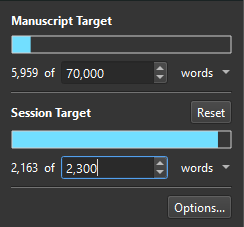
Project targets window

It also displays as a line bar at the top of the project with the Manuscript Target at the top, above the chapter title, and the Session Target below, so there's always something on show.

Top of Editor Window.


I'll live without a global undo and just ignore the bells and whistles. There are however, a few other advantages of Scrivener which I need to nail down here for when I go through this same thing again in the future. Colour labelling for files is gold. This is something I run through a whole project, going from orange for first drafts, yellow for revised and green for final. Simple, but very useful. I make use of the notes window in the Inspector too.

And I've got a plan for the compiler. Something I've never tried before. If I hit my wordcount today, I might have a play - at the time of writing this, I think I'm around 1,600 words. 

Later

Well, true to form, once I was back in Scrivener, I started messing around with the Compiler and lost about an hour. How can something designed to be used for writers be so insanely complicated to use? I'm from an IT background -- I used to build characters and VR environments for video games, so I'm not exactly wet behind the ears when it comes to using software, but this is just mental.

I gave up in the end and I've decided to just go with the standard formatting options. It's just easier that way.

But I did get some writing done too. I've just hit the word count. 2,314. But I've switched POV to 1st person as an experimental chapter. The chapter I wrote yesterday is from Alice's point of view. She's the wife, but she also has the potential for a big secret going on. And while the chapter is okay, it just isn't good enough. I think it would be much better told from the MC's perspective in conversation. But that's for a future edit.

This is why I find Writing Into the Dark so difficult. I feel like I need to know what is going to work before I write it. 

I'm going to keep going and simply experiment along the way. I heard a great piece of advice today about finishing the first draft and accept that it'll be terrible. But at the end, you'll have something you can mould.

This sounds so much less daunting than the Dean Wesley Smith approach.


Thursday, 2 January 2025

Writing Challenge Day 2

Well, I hit the word count. In fact, I crossed the line just now at 2376 words, so I'm writing this quick before Only Connect comes on (love that show, but I never get a single thing right!)

Anyway, quick summary of the day. I'm off work for the Christmas break, so I managed to do most of the work during the day, but I'll hold my hands up and admit that I went into editing mode which ate up a good few hours. A little change in Chapter 2 had a bit of a knock-on effect which meant deleting quite a chunk of chapter 1. I also needed to write a new opening. 

This is something I was thinking about last night. The story kicks off with the MC looking at an old house, but the village where the main action takes place acts as a crucible. Therefore, I wanted to have a metaphor for crossing into the forbidden world. I liked the idea of the village being cut off by a flooded road. I went down a few false paths, but ended up with fairly clean copy.

Just a quick note on writing software. I'm writing this manuscript with LibreOffice. I've ditched Scrivener for this project for few reasons. First of all, too many distractions. I tend to play with other things, so I thought if I have just a single window, I might be able to focus better. I've got also made a spreadsheet in LibreOffice to keep track of word counts and daily targets. 

LibreOffice Writer is very much like Word. And I can use it in with a windows theme to make the screen dark grey with white text, much like Scrivener's Dark Mode.

Okay, the story so far. 

New words: 2376. 

Current word count: 4314

Words to go: 63,748  


Wednesday, 1 January 2025

New Year Writing Challenge - Folk Horror project.

source: laurieboris.com

The challenge

Rather than do Resolutions I can't keep, I thought I'd kick off the New Year with a little writing challenge. 

This challenge comes in three parts.
  • Write an entire novel in January.
  • Edit and clean up in February (possibly – see below)
  • Submit to Agents in March.

Background

One of the surprises that came out of doing a degree in Creative Writing was finding that I have strengths in areas I thought were closed off. There was one story in particular that resonated, a short piece about the son of a grave robber. Dark fiction was something I found quite difficult after Matthew passed away, but this felt good. Unlike my Victorian vampire novel, which I had peppered with humour as a kind of safety net, this was pure, dark gothic fiction with an honest, earthy folk horror feel.

Gearing up

The genre of folk horror got under my skin and I found myself revisiting old classic movies like The Wicker Man (1973) and Blood on Satan’s Claw (1971) - a movie that scared the life out of me when I was nine. I rewatched modern movies in the same genre too: The Apostle (1997), The Wicker Man remake with Nicholas Cage (2006), The Ritual (2017) and the fabulous Midsommar (2019). In books, I went back to horror master, Adam Nevill, Bram Stoker (because, why wouldn't you?) and folk horror guru Andrew Michael Hurley.

At this point, I had an idea, but every time I tried to outline it, I ended up killing the idea stone dead and I couldn't work out why. But the idea was still there like a sore tooth you can't ignore...

write me... write me... write me...

How can I write something I can't plan?

Writing Into the Dark

And then yesterday, while walking the dog, I listened to a podcast interview with Dean Wesley Smith. I've mentioned Dean on this blog a few times in the past, and I'd heard of his writing process back when I used to read his blog (around the time he was Killing the Sacred Cows of Publishing), but this was a nice refresher. 

Dean calls his tried and trusted method Writing Into the Dark (others refer to it as Pantsing or Discovery Writing) and it's where you write without a plan. You have a premise or a basic idea, but rather than focusing on beats and trying to saving a cat, you flesh out the characters and allow the story find its own path. 

And it isn't only Dean Wesley Smith that writes in this way. Writers who dive in without a plan include:
  • Stephen King 
  • Lee Child
  • Dean Koontz
  • Neil Gaiman
  • George R.R. Martin
  • Mark Twain
  • Margret Atwood
  • Isaac Asimov 
Photo by Haydn Golden on Unsplash
Maybe it's time to kick off these stabilisers and just ride. 😃

Loglines and Pitching

And so, rather than working on a plan, I sat down and thought about the kind of book I want to write. Nothing detailed, just a general flavour. To do this, I focused on writing a single logline. This is something I learned from Screenwriting, where you nail the basic premise first because you need that to pitch the idea. And in Screenwriting, you usually pitch the idea before writing the script.

So why not try that too?

So I did. I researched a few agents, found four that are a good fit – one of which I’ve worked with before, and has a taste for a bit of Folk Horror – and I wrote a query letter. That’s right, before I wrote a single word of the manuscript, I wrote a full query letter.

Why? 

Because I want to know, before I start: 
  • Can I sell this book? 
  • Is this a book an agent can sell? 
  • Does the premise work? 
  • Is the premise so engaging that you must read it?
Bear in mind that agents get a lot of submissions. If you can’t capture their interest in your pitch, it doesn’t matter how good you think the book is, or how clever the twist at the end is because if it doesn't cry out, "Read me. Read me now!" it might not get read at all. 

Writing a pitch is also a great way to focus on the tone of what you’re writing. If you’re writing a romcom, is the premise itself funny? Is the basic idea underpinning the whole project going to make your audience laugh? In my case, is the premise going to make you uneasy, uncomfortable? Because that’s exactly what the best folk horror does and does well.

It took a long, long time to get both the premise and the query letter done. But now that I have that, I have a real sense of the tone of the book I want to write. It's not a road map; it's more like a creased and stained picture postcard of a place that makes my skin crawl.

Cool.

Well, today is Day One. So I thought I'd just dive in and see what happens. 

I managed to write 1,938 words in one sitting. And that includes time to spend going back to clean up and polish. And it wasn't a chore. It wasn't hard and I didn't get stressed thinking about the big picture. I focused purely on scenes and this little teeny tiny piece of storytelling. It was fun. But it also shows that this is an achievable target for a daily word count. 

So, where would that get me in 31 days? 60,078 words. But I’m aiming for 70,000. That means I have 68,062 more to go and only 30 days left, which means I'm going to need to write 2,269 words per day. Minimum.

That’s not bad. That's possible. An hour before work instead of breakfast telly, an hour at night before bed. That's definitely achievable.

What about editing and backtracking?

This is my Achilles Heel. When I draft, I constantly go back to change things. I doubt myself, I swap the order of things, switch POV and even change tense and style. But in this experiment, if I want to keep to these goals, there won’t be time. However, the Dean Wesley Smith method does allow for something called Cycling.

Cycling involves writing about 500 words at a time, then going back to edit typos and polish that small chunk. But not to change. You can expand and add details, but you're not rewriting. And once that chunk is done, it's done. It's in the bank. Then you can move onto the next 500 words and so on. 

The idea is by the time the first draft is complete, it should be ready to send out. I don’t know if I’m that brave, though, so I’ve kept February as a safety net. We’ll see. You only get one chance to sub an agent – and I don’t want to send out anything that isn’t my best work. 

So... that’s the challenge. To write approximately 2,300 words per day of clean copy to complete a 70,000 word novel in a single month with no plan and no idea where it's going.

Maybe I should have just done a few simple resolutions instead 😂

Day 1 word count: 1,938.

68,062 words to go.


Saturday, 17 August 2024

BA in Creative Writing - post mortem

Three years ago, I started out on a part-time BA in Creative Writing. This was an accelerated course, meaning a minimum of 37 hours of work per week and no summer break.

credit: Chris Spiegl, Unsplash

While that's a lot to take on when you work full-time, the course seemed to be exactly what I was after. It was structured for personal development as a writer and to explore subjects, genres and formats I would otherwise not consider. 

Some of the things I've written over the three years include:

  • Fantasy
  • Magical Realism
  • Creative non-fiction
  • Podcast scripts
  • Evergreen blog posts
  • Poetry for Performance (and performing it!)
  • Comedy scripts
  • Writing for theatre
  • Interactive fiction
  • RPG game
  • Romantic Comedy
  • Screenplay for an animated movie (partial)
  • Screenplay for a sitcom (full).
  • Screenplay for a drama (full).
One thing I did enjoy was writing for film and TV. Initially, the strict formatting and strange headings (INT. CAFE - DAY) were completely alien but once I realised the creative element of scriptwriting, I found them fascinating. 

I began reading scripts. Lots of scripts. Loads of scripts. And I started writing too - not just for Uni assignments, but for my own writing pleasure. I bought some decent screenwriting software (Fade In Pro) and dove in. I wrote a couple of sitcoms and some drama and decided to continue with Screenwriting for my final portfolio. 

The result was a 45 minute drama set in Sunderland. Along with that, part of the final assignment is Market Research and to write a query letter so that, at the end of the course, I've got something ready to go.

Looking back on the three years, was it worth it? Definitely. I feel like I've evolved as a writer and have a bunch of projects buzzing in the back of my mind to get going. This is where the course is a little odd, in that the point of the final project is to focus on what you want to do from this point on. But for me, I feel like I've only scratched the surface of a bunch of things that I want to explore further. Screenwriting is definitely on the list. I've loved that, but also RPG for interactive fiction (something I've got ticking away in the background), podcasting, scripting for YouTube and stand-up comedy. 

But I've also missed writing longer form work. Writing novels is something I've loved since I was a kid, and is something I'm definitely going to continue with. There is something about the complexities and depth and sheer fun of writing a novel that still gives me a buzz. I've also taken a much deeper dive into the world of Indie Publishing and have a road-map of what I would do if I was ever start again from scratch, because, let's face it. My current backlist is like a pick'n'mix shop.

But there was another aspect to doing this degree. Something I haven't shared just yet. I'm still thinking that one over.

But in the meantime, I'm going to sit back, enjoy the time not having to worry about citations and references and grades, read a lot more, watch a bit more TV, a bit more theatre and see what happens next.


Sunday, 31 December 2023

Writing Round-up and a Look ahead to 2024

2023 was a busy year writing-wise because I rewrote my first romcom in 1st person and relaunched it under a new title, Trust Me, I'm a Liar, then got to straight to work on book 2. 

While this was going on, I was also working full-time and doing a part-time degree in Creative Writing. This is a fast-track degree, so it's a lot of work and there's no time off during the summer. Year 1 was a breeze and a lot of fun. Year 2 stepped it up a notch and then in September, I started my third and final year, which made writing Trust Me, I'm an Artist a big challenge to fit in. 

But, I did it. Yesterday, I uploaded the final manuscript to Amazon. This is the first book I've put up for pre-order, so it doesn't actually go live until the 5th of January 2024. I thought putting it up for pre-order might spur me along into finishing it, which worked a treat. Who doesn't love a bit of totally unnecessary pressure? 

Looking ahead to 2024, I've got a bit of a choice. I quite like the idea of continuing the Trust Me... series, but don't really know where to take it next. Usually, all it takes is a bit of downtime and a long walk. 

As for the series and sales and such, it's been a bit tricky to get the ball rolling. And so, having come to the conclusion that I know next to nothing about how to market and promote a business successfully, I have applied to Mark Dawson's SPF Foundation, which sponsors indie authors by giving them access to the two flagship SPF courses - LauchPad and Ads For Authors, plus a whole load of credit to spend on Reedsy services, such as professional covers and editorial services. 

2024 is also the year I'll graduate with my first degree. Creative Writing with Falmouth University is amazing. When I was first looking for something like this, all of the other courses that were called Creative Writing were really just a pick 'n' mix of humanities modules with only one or two relevant to what I was interested in. The Falmouth Course is designed with creativity at the heart. Modules covered so far have involved genre writing (from horror to romance and sci-fi), writing for the stage, for TV and cinema, video games, blogs, creative non-fiction, stand-up comedy and performance poetry. It is so incredibly involved that I have absolutely no idea what I'm doing for my final piece. The final piece (called The Masterpiece) is 8,000 words of creative writing with a 2,000 word supporting essay. This starts at the end of May with a hand-in date at the end of August - so that's my summer sorted out! 

Other things on the horizon are the same things I struggle with every year. Should I blog more? Should I write under a new name? Should I start a newsletter when I barely have time to look at Facebook?

Usually, those things always come down to the same solution. The best thing I can do as a writer is to write another book.

So I guess it's time to take the dog for a long walk. 

Happy New Year!

Tuesday, 23 August 2022

Writing on a Chromebook

I've been playing with a budget Chromebook for the past few months and have to say, a Chromebook is a pretty good choice for writing. I'm using an Acer CB314-1H which cost me a whopping £79 (thanks to a £100 cashback deal). It has a bright, crystal clear FHD screen, a fantastic keyboard (much better than my HP laptop) and it is super lightweight.


As far as the keyboard goes, on first impressions, it seems that the keyboard has no delete key or CAPS lock, but both are available with help from the ALT key. It also seems that there is no way to turn the Trackpad off. This takes about ten seconds on Google to enable debug shortcuts, but to be honest, even with the option available, I rarely use. I catch my laptop trackpad all of the time, but hardly ever on the Chromebook.

The next thing to consider is software. There's Google docs. You can waste time searching the internet for alternatives, but this means enabling Linux and playing about and it's really not worth it. I managed to get LibreOffice working but it was slow and couldn't access Drive, which is where all the files are. But Google Docs is seamless, and a lot more powerful than it looks, certainly good enough to create a manuscript for ebook or publication. It can get a bit slow with large documents, but I haven't encountered too many problems and I'm working at just over 60,000 words, but for ease of use, I chop the document into five chunks. I use headings for titles which gives me a Document Outline (same as a Navigation pane and similar to Scrivener's Binder). I also use the comment pane all of the time when editing (a recent update allows you hide comments). Getting the work out is a breeze compared to Scrivener - you just download it as the format you want.

The next advantage is the grammar checker. The grammar check in Google Docs is amazing and picks up things that other word processors miss. It is certainly infinitely better than Scrivener, so when I get to proofing, I'd have to export to Google Docs anyway. I do like Scrivener for drafting simply for the option of coloured labels, but I can live without it. The grammar checker trumps any bells and whistles every single time because I continually miss out words when writing. Even drafting, I tend to write cleaner, stronger copy in Google Docs than anything else. 

So there you go. Yes, you can definitely use a Chromebook for writing novels. It's not the best solution. Hey, given the choice, I'd love a Macbook Pro, but those are way out of my budget, and probably always will be. For now, I'm more than happy with my £79 Chrome-buddy.


Monday, 22 August 2022

Veggie Challenge

 It all began with a duck.


Two ducks, actually. They appeared in the middle of a housing estate and were waddling about outside my front door. I went out to get a photo and they were really friendly. They were curious too. This messed with my mind a little. I mean, ducks with personalities. You can’t eat something that’s friendly. That's just not right.

But the ducks flew away and I got over them. Well, kind of. But then last week, we were on holiday in Scotland with a farm right next to us. Our back garden looked out on a field full of cows. The cows had calves. They were friendly too, and curious. They kept coming over to see how we were getting on then skipping about the place exactly like cows don’t. 

Suddenly, I felt a bit guilty about the huge block of minced beef I’d bought for bolognese. 

The thing is, I've never had much success when I've tried going veggie before. I usually fail when it comes to ordering take-away or going into a pub for something to eat. But this happened in the middle of a sober challenge that was going insanely well. I had the daft idea of doing  Dry January in the summer, simply because it's more of a challenge that way, but I was so bowled over by the changes during the first month that I kept going. I ended up doing 72 days and the benefits are amazing. I lost two stone in weight, sorted out a whole load of mental health issues, blood pressure is firmly within the healthy bracket, my productivity went through the roof and I was reading more. I only broke my sober streak to see if I missed it as much as I thought. That was another shock. I was surprised to find that I couldn’t bear the taste of lager or wine. I also hated the feeling of being drunk. Something I thought I loved. 

So I’m doing that challenge again. This time I want to let it roll and just see how long I can go. 90 days is the first marker. But, as it's Day 1, it seems a good idea to do a Veggie Challenge at the same time and with the same mindset - to see what the health benefits are. Why not? So I thought I'd kick off with breakfast.

Let's just say it's not a good start.

Yesterday, not realising I was about to do a Veggie Challenge, I bought a load of bacon to go with the black pudding and sausages that are already in the fridge. Unfortunately, those aren't ideal foods for a wannabe Veggie, but I was all fired up for a cooked breakfast. However, thanks to my morality wobble with the cows, I have some plant-based sausages in the freezer.

I got them out and stuck them in the oven. Twenty minutes later, they’re ready to go. Here they are, on brown bread with a squirt of tomato sauce and a side order of black coffee.

Mmmmm.... Tasty eh?

Not exactly. They tasted bloody awful. The pack says they're made from peas. The experience is like eating Weetabix-flavoured cardboard.

Besides, what is the point of veggie sausages? I get veggie fingers, because they're colourful and taste like they sound, but are veggie sausages meant to mimic pork? Does that mean there's some Quality Assurance guy eating both to make sure they do? So Porky Pig is being slaughtered regardless? There's something not quite right about that. I'm not sure that meat substitutes are the way to go. 

Time to go shopping.

Saturday, 25 June 2022

Traditional vs Self Publishing: my personal experience so far

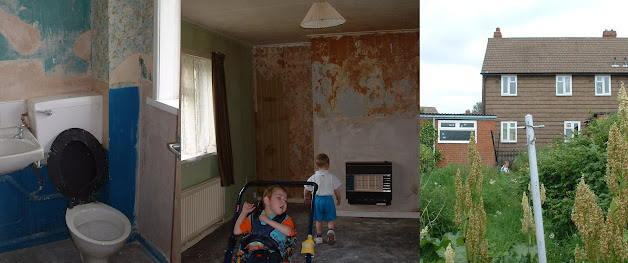
I first decided to make writing a career when I realised that my son’s disability meant he would always need someone at home. It didn’t seem fair that my wife would never be able to return to nursing, so in 2003 we swapped roles. I became Matthew’s full time carer, wrote when he was at school and began submitting book after book.

image c/o seatletimes.com

It took five years and six novels to get “The Call” and when it came, I was ecstatic. This was it, the beginning of a new chapter! We’d be able to make a better life, buy a decent car, maybe even move out of our council house.

A first look at our new council house. Image: Colin Mulhern

Things didn’t work out quite like that. The world of traditional publishing wasn’t quite what I expected.

Promotion

The publisher offered a promotional package that included a London book launch, a professionally produced YouTube trailer, press releases, newspaper reviews and an ebook version – this was the early days of Kindle, the ideal time to break into the ebook market.

The ebook never came out. I had to create the YouTube trailer, organise my own book launch, sort out school and library visits and contact local press.

Money

The money was dire, but I had a foot on the ladder. Book 2 did rather well. It sold international rights and made it to the final three for a major YA competition. Book 3 was due for release in 2015. My career was going great, right?

Wrong. There was no more money, the publisher cut all ties and my agent retired.
 

Image credit: Inc. Magazine

Moving on

I managed to get a second agent, who was happy to represent my next four books but none of them sold. This was getting frustrating, but in real terms, it was the least of my worries.

Hitting the floor

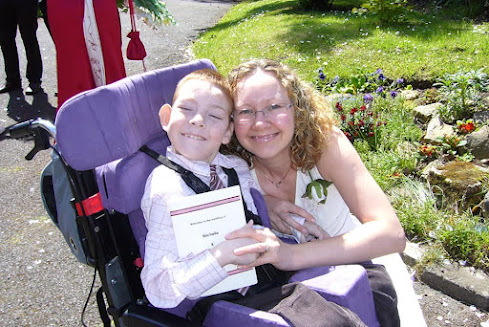
In 2015, when Matthew was sixteen, his disability got the better of him. Grief took over our lives and the world stopped.

Matthew with his mum. Image: Colin Mulhern

After a long break, I set out to write something completely new, something for the younger end of the children's market that Matthew would have liked. My agent wasn't confident about the book or that end of the market, so we split on good terms and I set about finding a publisher myself. I got an offer of a deal just three days after sending the manuscript out. 

The deal came with all kinds of promises: promotion, movie deal, discussions with Disney (yeah, really). What I actually got was a Twitter promotion, and when the first book bombed, the entire series was cancelled.

I was devastated. I had failed in making a better life for Matthew when he was alive, and now I’d failed in doing something in his memory. The traditional world of publishing had led to frustration, misery and depression.

But there was another option...

A brave new world

I decided to dip my toe into the world of Indie Publishing (a fancy name for Self Publishing). Despite the stigma, it's a whole lot of fun. I found the whole process to be quick, simple and very enjoyable. It also meant I could write whatever I liked. So I wrote another children's book, a gothic horror for adults and a rom-com. It was like I'd found a toy shop and was playing with everything I could get my hands on. I was having a blast, but I was also a bit blinded by the Indie success stories.

Indie Giants

L.J.Ross Image:BBC News
Just like mainstream best sellers, there are some incredible Indie success stories making enough money to make your eyes water. 

L.J. Ross was rejected by traditional publishers. She turned to self publishing and has sold over 7 million books. Other self published giants include Mark Dawson, Michael Anderle, Craig Martel, Chris Fox, Marie Force. Oh, and there's Stephanie Hudson – a seven-figure author who made $300,000 in a single month (check out this episode of the SELF PUBLISHING SHOW).

Is it really the promised land?

The short answer is no. Some of these authors spend tens of thousands each MONTH in advertising. Most are marketing strategists first, writers second. Some go as far as saying it's an 80/20 split. 

And where there are success stories, there are also failures. There are forums full of writers who have invested thousands on courses in marketing and advertising, then invested more into editing, cover design, Facebook and Amazon ads, only to get nowhere. The idea that if you spend enough on marketing, you'll make more in return is clearly not true. It's also worth noting that many of those success stories seem to be associated with authors who are keen to sell you courses on how you can be successful too. But why would a successful author want to run online courses if they are truly successful? Hmmmm. The cynical side of me is frowning at that one.

The bottom line is that even with a good product and a bit of marketing, in reality Indie Publishing is just as risky and unpredictable as Traditional Publishing. 

What kind of writer do you want to be?

I think it all comes down to this. To ask why you write and what you really want to achieve. Do you want to work full time from home, wrestling with the ever-changing marketing algorithms? Do you want to write on a morning before work or late at night to wind down? Do you want to be truly independent or part of a team? 

Final thoughts

While I do enjoy the control, simplicity and speed of self publishing, and despite the frustrations I encountered in the Trad world, there is nothing like the buzz of getting "The Call." That feeling that you have written something good enough for an agent to champion, and for a publisher to agree to and invest in. 

And there's walking into a shop, not a local shop, but one a few hundred miles from your hometown, a place you've never been before, and right there, on the bookshelf, is a copy of your book. 

There really is something special about that.


CLASH in my first in-store display.


A Facebook friend found Arabesque!

Thursday, 3 March 2022

How to write like a pro: the secret formula your writing coach won't teach you.

Image c/o Dean Wesley Smith
In 1947, Fantasy Press released Of Worlds Beyond: The Science of Science Fiction. This was a short collection of essays by various Science Fiction authors. Robert Heinlein was one of those authors, and he concluded his guide with a list of business habits, explaining that they were: “a group of practical, tested rules, which, if followed meticulously, will prove rewarding to any writer.” and became known throughout the writing community as Heinlein’s Rules.

Heinlein’s Rules

  • You must write.
  • You must finish what you start.
  • You must refrain from rewriting except to editorial order.
  • You must put it on the market.
  • You must keep it on the market until sold.
Many writers overlook their simplicity, but consider the fact that Robert Heinlein wrote 32 novels and over 50 short stories - perhaps there is something in his method.

Do the rules actually work?

In 1981, Dean Wesley Smith was on the cusp of giving up on his dream to be a writer when he chanced upon Heinlein’s Rules. Having nothing to lose, he decided to follow them to the letter. He went from being unable to sell anything to becoming a multiple-times New York Times bestseller. He currently has over 200 novels to his name and is in demand as a ghost writer because he writes fast and delivers on deadlines.
Treat your writing as a business.

Have you ever heard of a plumber with plumber’s block? Or a builder who can only lay bricks when the muse takes him? What about a car mechanic who has to find the right mental zone before attempting an oil change? This is essentially what Heinlein’s first rule is about. You have a job, so get to work. You must write.

Avoid distractions

For novelists, there is a point around the one-third mark when the honeymoon phase ends and the hard work begins. In his regular YouTube show, Author Level Up, Michael La Ronn gives advice about tackling the dreaded one-third mark and how he, after thirty-seven novels, still experiences that moment in every novel he writes. The only practical solution is to work through it: you must finish what you start.
Refrain from rewriting.

This does not mean do not edit or polish. It ties in more with the second rule where you keep questioning your own ability. Adding extra depth, emotion and details in later drafts is fine – you must do that – but what you should avoid doing is to going back and completely rewriting or deleting previous work. Edit, polish and move on. Stop worrying.

Put Your Work on the market.

Don’t worry that people won’t like it. Even the best of the best get one star reviews. It’s called taste. Besides, your book already has one fan... You!

Don’t treat publishing as a lottery. Be strategic. Don’t send a slasher horror to a children’s publisher, or a Minecraft strategy guide to a romance publisher. If you are targeting agents, the same applies – visit their website, find out who they represent and what they want.

Keep it on the market until sold.

So you sent it out and it got rejected. Welcome to the club. You’re in good company.
  • Carrie by Stephen King - 30 rejections.
  • Dune by Frank Herbert - 23 rejections.
  • Catch 22 by Joseph Heller - 22 rejections.
  • Lord of the Flies by William Golding - 21 Rejections.
Even JK Rowling’s original pitch for Harry Potter was rejected twelve times. These authors didn’t give up when editors turned them down. They just moved on, fuelled determination and self belief until they found the right editor.

What if there’s nowhere else to send it? 

There is still another option. Click here to read my blog post on the alternative (and potentially lucrative) route to publication.

For more details on Heinlein's rules, check out Dean Wesley Smith's guide. He goes into much more detail.

post updated: 18/04/22)

Saturday, 23 October 2021

Bladdy Stoodents

I'm a student! Bloody hell!

The Young Ones. Image c/o BBC
I've been toying with the idea of doing a degree in Creative Writing for years, but it would have to be distance learning and the ones that were available didn't really grab my interest. The Open University, for example, is a mish mash of modules from their humanities box with only a couple of modules dedicated to Creative Writing. What I was after was something more like a Fine Art degree, but in writing, something focused on personal development rather than simply studying others.

In the summer, I found it.

The degree is with Falmouth University and fits my wish list like a glove. It's more like a Fine Art degree in it seems to be all about personal development and practical tasks to help you become a better writer, and not just for novel writing. It covers everything from identity and society to creative imagery, blog posting and SEO. I barely paused to take breath and applied the same day. 

It's week 5 and so far, it's really delivering. As online courses go, it's very demanding - minimum 27 hours study per week and a LOT of reading, but I've still got time to read for pleasure and write my own stuff, which is also part of the course. Win win! 


Monday, 3 May 2021

Pulp fiction

The the harsh reality of traditional publishing is this: if books don't sell, they get pulped. In the case of Buttercup, the publisher is moving distribution companies, which means the pulping decision is pushed on them a little earlier than they'd like. They sent me an email saying they were sorry that things hadn't gone better and that publishing is a bit of a gamble at the best of times, however, for the price of postage, I can have the remaining stock. Well, if nothing else, I'd have loved a full class set, or even just a group set for my low ability readers. Unfortunately, the publisher hadn't updated my email address, so the warning sat unnoticed in an old account. I only found it by chance the other day. By then, of course, it was too late.

It's not necessarily the end of the road though, as they have reverted the rights which means I could take the title somewhere else. I doubt that another publisher would consider it, but I could do it myself - I'd just need a new cover and internal layouts. That's easy enough as the artwork is based on my own illustrations. As for the series, I originally planned it as four books, three of which were written, the fourth was planned out in note form to bring the whole thing to a suitable end.

However, times move on, and right now, I'm writing a different kind of fiction. Buttercup helped to get me through a difficult time. It was fun to write and I really enjoyed the opportunity to illustrate it (which ended up more work that I realised!) but for now, the whole episode is being filed under the Downside of Traditional Publishing. 

Tuesday, 27 October 2020

CAMP TOMBSTONE: Night of the Pickled Donut

This has been a fun little project. Back in the summer, I thought this story would sit in my hard drive and go no further. I wrote the original script when I had an agent. She loved it but couldn't sell it, so I thought that was the end of the road for this little story. But during the summer, listening to a podcast called the Self Publishing Show, I heard Karen Inglis talk about her own self published children's books. Until then, I never thought self publishing was an option for children's authors. The simple reason that kids don't buy ebooks and as that it the primary income for most self published authors, it wasn't a viable business.

But, there was something I didn't consider. The reason that self published authors make most of their money through ebooks is because the paperbacks are too expensive. The printing costs are high meaning the cover price has to be high in order to make any profit. Even just a 50p profit margin is enough to price yourself out of the market, so for many KDP authors, paperbacks are simply not worth the effort. However, children's books are shorter. Less pages = lower printing costs. This makes a huge difference.

Monday, 22 June 2020

Virus Lockdown Birthday Blues.

It's t-shirt prison for you, young fella-me-lad
Birthday blues? Nah, not really. So okay, I might have missed out on sea and sun and sangria as my surprise holiday in Spain was cancelled, but on the bright side, I got this cool t-shirt. I liked it so much, I've put it in a frame. My actual party was a very small affair - about six of us, all spaced out in my sister-in-law's back garden. A couple of cans, few shots and an afternoon of baking sun. Didn't really need Spain at all. It was fun. Different, but still fun.

Sometimes it's important to focus on the good stuff and try not to get bogged down with the negatives. Now, more than ever, it's very easy to get wrapped up in the down side of things, and 24hr news coverage replaying the same stories, the same predictions and interviews doesn't help one bit. 

Saturday, 2 May 2020

A Horror Revival?

There was a time in the 80s when every bookshop and newsagent had a healthy horror section packed with black covers and shadowy illustrations. 

Today, that is no longer the case. In most instances, the horror section has been absorbed into Fantasy and Sci-Fi, which means it's only the big names on show, while new, and event established talent is completely overlooked.

The Ritual - I'm never going out in the woods again!

Adam Nevill is a good example. Adam is one of my favourite writers of any genre. He has won the August Derleth award three times and The Ritual had a major movie release, yet his books are nowhere to be seen - certainly not in any of my local bookstores. This all gives the impression that the audience for horror fiction is too small to bother with.

Friday, 3 January 2020

Yearly roundup and a look ahead to 2020

I took a long break from writing at the start of the year. The second Buttercup book had been put back to September, there were no plans for books 3 & 4 and my other attempts at breaking into the children's market had fallen short of the mark.

But one unexpected thing that came as a result of writing Buttercup was it rekindled my love of classic horror. Horror is the one genre that has always been with me. As a kid, I loved horror movies. I'll never forget the impact Salem's Lot had on me, or the first time I saw An American Werewolf in London. For books, it started when I spotted the Eleventh Pan Book of Horror Stories in a newsagent on my way to school. I managed to get the rest from jumble sales. In my teens, I moved onto James Herbert, Stephen King and HP Lovecraft. My very first attempt at a full length novel was a terrible attempt to do Cthulhu-inspired horror. And right now, my favourite author by far is Adam Nevill. He's just incredible.

Wednesday, 22 May 2019

Cover reveal

Buttercup Sunshine and the House on Hangman's Hill
has a finalised cover. 


Due out September, so not too long to wait.


New Romcom out on submission

The End? That's the easy bit. Finished. My manuscript is complete and ready to go.  But it's not the Folk Horror I planned back in J...