
I first decided to make writing a career when I realised that my son’s disability meant he would always need someone at home. It didn’t seem fair that my wife would never be able to return to nursing, so in 2003 we swapped roles. I became Matthew’s full time carer, wrote when he was at school and began submitting book after book.
 |
| image c/o seatletimes.com |
It took five years and six novels to get “The Call” and when it came, I was ecstatic. This was it, the beginning of a new chapter! We’d be able to make a better life, buy a decent car, maybe even move out of our council house.
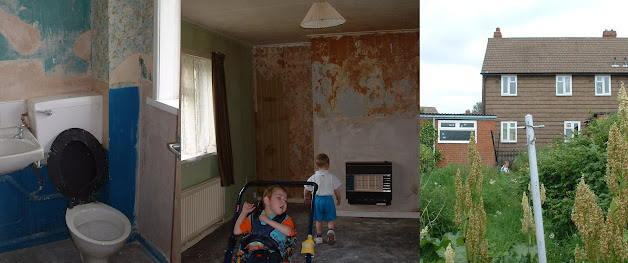 |
| A first look at our new council house. Image: Colin Mulhern |
Things didn’t work out quite like that. The world of traditional publishing wasn’t quite what I expected.
Promotion
The publisher offered a promotional package that included a London book launch, a professionally produced YouTube trailer, press releases, newspaper reviews and an ebook version – this was the early days of Kindle, the ideal time to break into the ebook market.The ebook never came out. I had to create the YouTube trailer, organise my own book launch, sort out school and library visits and contact local press.
Money
The money was dire, but I had a foot on the ladder. Book 2 did rather well. It sold international rights and made it to the final three for a major YA competition. Book 3 was due for release in 2015. My career was going great, right?Wrong. There was no more money, the publisher cut all ties and my agent retired.
 |
| Image credit: Inc. Magazine |
Moving on
I managed to get a second agent, who was happy to represent my next four books but none of them sold. This was getting frustrating, but in real terms, it was the least of my worries.
Hitting the floor
In 2015, when Matthew was sixteen, his disability got the better of him. Grief took over our lives and the world stopped.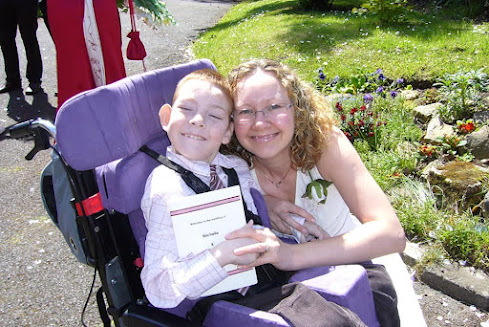
Matthew with his mum. Image: Colin Mulhern
After a long break, I set out to write something completely new, something for the younger end of the children's market that Matthew would have liked. My agent wasn't confident about the book or that end of the market, so we split on good terms and I set about finding a publisher myself. I got an offer of a deal just three days after sending the manuscript out.
The deal came with all kinds of promises: promotion, movie deal, discussions with Disney (yeah, really). What I actually got was a Twitter promotion, and when the first book bombed, the entire series was cancelled.
I was devastated. I had failed in making a better life for Matthew when he was alive, and now I’d failed in doing something in his memory. The traditional world of publishing had led to frustration, misery and depression.
But there was another option...
I was devastated. I had failed in making a better life for Matthew when he was alive, and now I’d failed in doing something in his memory. The traditional world of publishing had led to frustration, misery and depression.
But there was another option...
A brave new world
I decided to dip my toe into the world of Indie Publishing (a fancy name for Self Publishing). Despite the stigma, it's a whole lot of fun. I found the whole process to be quick, simple and very enjoyable. It also meant I could write whatever I liked. So I wrote another children's book, a gothic horror for adults and a rom-com. It was like I'd found a toy shop and was playing with everything I could get my hands on. I was having a blast, but I was also a bit blinded by the Indie success stories.Indie Giants
 |
| L.J.Ross Image:BBC News |
Just like mainstream best sellers, there are some incredible Indie success stories making enough money to make your eyes water.
L.J. Ross was rejected by traditional publishers. She turned to self publishing and has sold over 7 million books. Other self published giants include Mark Dawson, Michael Anderle, Craig Martel, Chris Fox, Marie Force. Oh, and there's Stephanie Hudson – a seven-figure author who made $300,000 in a single month (check out this episode of the SELF PUBLISHING SHOW).
Is it really the promised land?
The short answer is no. Some of these authors spend tens of thousands each MONTH in advertising. Most are marketing strategists first, writers second. Some go as far as saying it's an 80/20 split.
And where there are success stories, there are also failures. There are forums full of writers who have invested thousands on courses in marketing and advertising, then invested more into editing, cover design, Facebook and Amazon ads, only to get nowhere. The idea that if you spend enough on marketing, you'll make more in return is clearly not true. It's also worth noting that many of those success stories seem to be associated with authors who are keen to sell you courses on how you can be successful too. But why would a successful author want to run online courses if they are truly successful? Hmmmm. The cynical side of me is frowning at that one.
The bottom line is that even with a good product and a bit of marketing, in reality Indie Publishing is just as risky and unpredictable as Traditional Publishing.
What kind of writer do you want to be?
I think it all comes down to this. To ask why you write and what you really want to achieve. Do you want to work full time from home, wrestling with the ever-changing marketing algorithms? Do you want to write on a morning before work or late at night to wind down? Do you want to be truly independent or part of a team?
Final thoughts
While I do enjoy the control, simplicity and speed of self publishing, and despite the frustrations I encountered in the Trad world, there is nothing like the buzz of getting "The Call." That feeling that you have written something good enough for an agent to champion, and for a publisher to agree to and invest in.
And there's walking into a shop, not a local shop, but one a few hundred miles from your hometown, a place you've never been before, and right there, on the bookshelf, is a copy of your book.
There really is something special about that.
 |
| CLASH in my first in-store display. |
 |
| A Facebook friend found Arabesque! |
_KV-2560.jpg)
No comments:
Post a Comment